

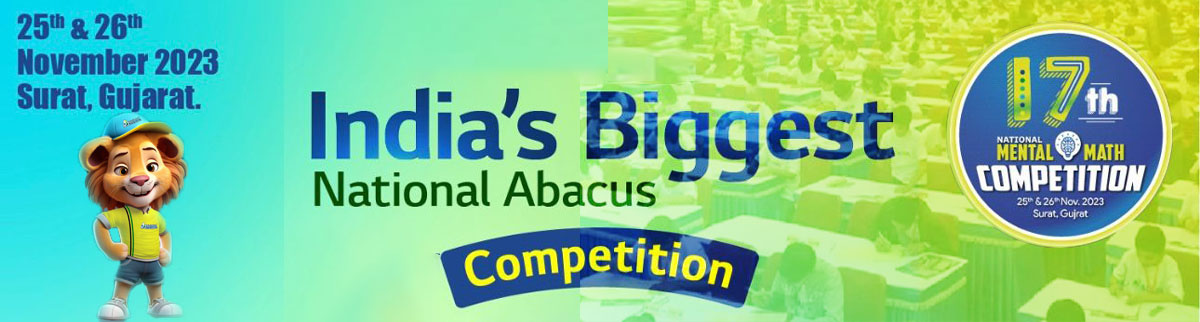
We are pleased to announce the participation of 3378 students in the 17th National Level Aloha competition held in Surat, Gujarat. Among them, 984 students achieved success, earning trophies in various categories:
- Champions: 12
- Winners: 319
- 1st Runner-up: 329
- 2nd Runner-up: 324
Congratulations to the students, parents, and franchise members for their tireless efforts, contributing to the success of the competition. Let's collectively strive for continued growth and success for Aloha India. Thank you all for your contributions!



Become a Franchisee

As an ALOHA Franchisee, you will benefit from being able to follow a proven system for success. You can also take full advantage of the ALOHA brand which is recognized for quality education worldwide.
Join us NowBecome a Student

Our vision is to empower students from 4 to 14 years of age to grow and Succeed with the help of this wonderful, innovative, comprehensive, easily accessible and yet affordable concept.
Apply NowWhy ALOHA
- Internationally Recognized - Aloha is certified by the Malaysian Abacus and Mental Arithmetic Association.
- Most Experienced Aloha has over 3 decades of experience in Mental Arithmetic. More than 5 million students have benefitted from Aloha and the number is ever-increasing.
- Quality & Reach Aloha India is ISO 9001 : 2000 certified for our process, quality-systems and standards. ALOHA Mental Arithmetic has over 5,500 centres in over 45 countries.
Welcome to Aloha
Aloha Programs are Scientific Brain Management Techniques
Aloha India, which was established in 1993 at Chennai, is the Indian subsidiary of Aloha International, Malaysia, a global leader in advanced abacus and Mental Arithmetic programs specially designed for children in the 4-14 year age span.
Essentially, the Aloha Programs are nothing but scientific brain management techniques that unveil the infinite potential of the human brain and its effective use.

Read More
30
Years
45
Countries
5500
Centres
5000000
Students
ALOHA Programs
This novel and holistic whole brain development program aimed to help them succeed by creating a strong academic foundation for life.








Franchise Opportunity
 Do you have a burning desire to be your own boss?
Well, if you have this burning desire, then we have the skills, expertise, proven business model, well defined system and real time experience.
Do you have a burning desire to be your own boss?
Well, if you have this burning desire, then we have the skills, expertise, proven business model, well defined system and real time experience.
Parents Corner
 To build the mental ability to calculate quickly and accurately without using any physical external device, such as abacus, calculator etc.